
The buy borrow die strategy has been described on the floor of the US Senate as “perfectly legal” by the very senator who wants to end it. In the Congressional Record, Senator Ron Wyden said that current practices under the strategy are perfectly legal, and he called the result a “pretty sickening reality.” So what is this strategy, and why does it make so many people angry?

- Hydrating sugar scrub for gentle, effective exfoliation
- Soft, sugary notes of cranberry, marshmallow, and toasted sugar
- Enriched with Shea Butter for deep moisture and softness
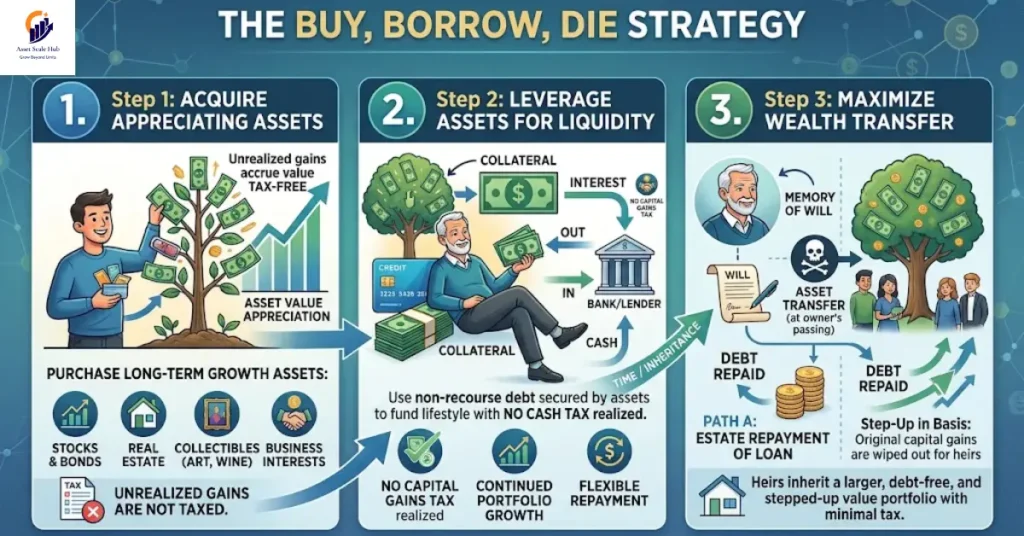
In plain words, the buy borrow die strategy is a way for very wealthy people to hold assets that rise in value, borrow money against them instead of selling, and keep the assets until they die. Selling creates a tax bill. Borrowing, in general, does not. The details matter, though, and they are less tidy than the slogan suggests.
Rupee figures in this article use Rs 277.5 per US dollar, the open-market rate in Pakistan on October 13, 2026, according to Pak Observer.
What the Buy Borrow Die Strategy Means, Step by Step
Step 1: Buy
You buy something that grows in value over many years: shares in a company you founded, a stake in a business, real estate. As long as you do not sell, the gain stays on paper. Wyden’s office describes the idea as borrowing against the untaxed appreciated value of assets.
Why not just sell? Because sales have a cost. For 2026, the top federal rate on long-term capital gains is 20%, and many high earners also pay an extra 3.8% net investment income tax, which makes 23.8% in total, according to Frost Brown Todd.
Step 2: Borrow
Instead of selling, you pledge the assets as collateral and borrow cash. A real example: when Elon Musk financed Twitter in 2022, a $12.5 billion loan was secured by $62.5 billion of Tesla stock (about Rs 3.47 trillion borrowed against Rs 17.3 trillion of stock). According to StreetInsider, the loan’s maximum starting loan-to-value was 20%, with a margin-call level of 35%.
Larry Ellison offers a current example. According to Bloomberg, Oracle’s 2026 filing shows he pledged 413 million Oracle shares, up from 346 million a year earlier. We explain how this works in our guide to how billionaires pay without selling stock.
Step 3: Die
This is the part that makes the strategy work. Under federal law, inherited property generally gets a new tax basis equal to its fair market value on the date of death, according to IRS Publication 551. That means the gain that built up during the person’s life is, for the heirs, generally wiped out for income-tax purposes.
But “die” does not mean “tax-free”
The estate tax still exists. For 2026, the federal exemption is $15 million per person (Rs 4.16 billion) and $30 million for married couples, and the top rate on amounts above it is 40%, according to the National Law Review. So the step-up in basis removes one tax, not all taxes. Wealthy families use other tools to deal with the estate tax, and those are a separate topic.
Where the Phrase Buy Borrow Die Strategy Comes From
The phrase is credited to tax law professor Edward McCaffery of USC, according to ProPublica. It became widely known after ProPublica’s 2021 reporting on leaked IRS records, and later through Senate hearings. At a hearing with Treasury Secretary Janet Yellen, Wyden called it a “glide path” for billionaires to pay little or nothing in tax for years.
What the Tax Records Showed
ProPublica’s 2021 series used a measure it called a “true tax rate”: taxes paid divided by the growth in a person’s wealth, using Forbes estimates. It is not a normal tax rate, and ProPublica says so.
- Jeff Bezos: his wealth grew by $99.0 billion between 2014 and 2018 (Rs 27.5 trillion), and he paid $973 million in federal taxes (Rs 270.0 billion), a true tax rate of 0.98%.
- No federal income tax: ProPublica reported that Bezos paid none in 2007 and 2011, and Elon Musk paid none in 2018.
- The top 25: the 25 richest Americans had a combined true tax rate of 3.4% over those five years, according to the Americans for Tax Fairness summary.
These figures are one newsroom’s calculation from private records, not a court finding. Defenders of the system say unrealized gains are not income under current law, and that the loans have to be repaid with interest.The buy borrow die strategy has been described on the floor of the US Senate as “perfectly legal” by the very senator who wants to end it. In the Congressional Record, Senator Ron Wyden said that current practices under the strategy are perfectly legal, and he called the result a “pretty sickening reality.” So what is this strategy, and why does it make so many people angry?
In plain words, the buy borrow die strategy is a way for very wealthy people to hold assets that rise in value, borrow money against them instead of selling, and keep the assets until they die. Selling creates a tax bill. Borrowing, in general, does not. The details matter, though, and they are less tidy than the slogan suggests.
Rupee figures in this article use Rs 277.5 per US dollar, the open-market rate in Pakistan on October 13, 2026, according to Pak Observer.
What the Buy Borrow Die Strategy Means, Step by Step
Step 1: Buy
You buy something that grows in value over many years: shares in a company you founded, a stake in a business, real estate. As long as you do not sell, the gain stays on paper. Wyden’s office describes the idea as borrowing against the untaxed appreciated value of assets.
Why not just sell? Because sales have a cost. For 2026, the top federal rate on long-term capital gains is 20%, and many high earners also pay an extra 3.8% net investment income tax, which makes 23.8% in total, according to Frost Brown Todd.
Step 2: Borrow
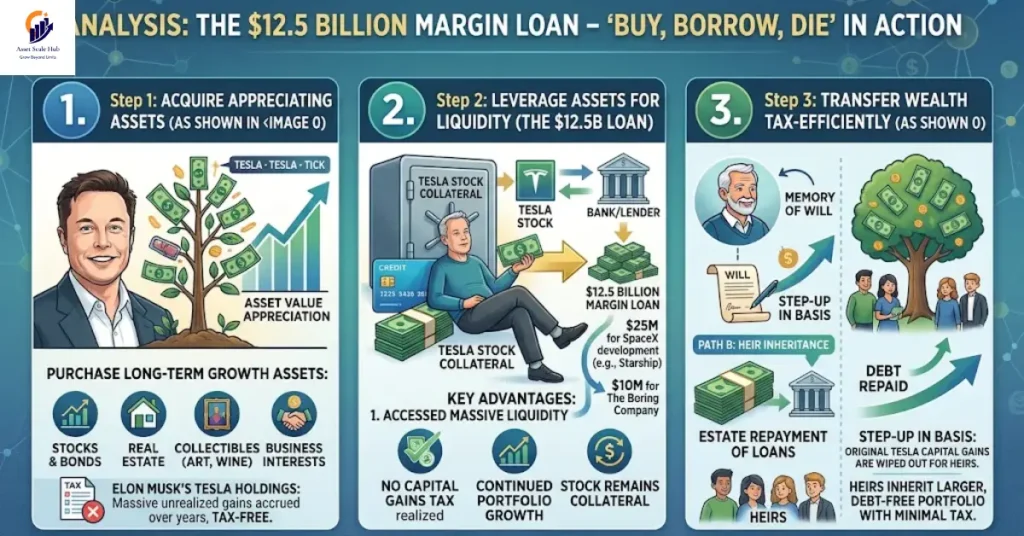
Instead of selling, you pledge the assets as collateral and borrow cash. A real example: when Elon Musk financed Twitter in 2022, a $12.5 billion loan was secured by $62.5 billion of Tesla stock (about Rs 3.47 trillion borrowed against Rs 17.3 trillion of stock). According to StreetInsider, the loan’s maximum starting loan-to-value was 20%, with a margin-call level of 35%.
Larry Ellison offers a current example. According to Bloomberg, Oracle’s 2026 filing shows he pledged 413 million Oracle shares, up from 346 million a year earlier. We explain how this works in our guide to how billionaires pay without selling stock.
Step 3: Die
This is the part that makes the strategy work. Under federal law, inherited property generally gets a new tax basis equal to its fair market value on the date of death, according to IRS Publication 551. That means the gain that built up during the person’s life is, for the heirs, generally wiped out for income-tax purposes.
But “die” does not mean “tax-free”
The estate tax still exists. For 2026, the federal exemption is $15 million per person (Rs 4.16 billion) and $30 million for married couples, and the top rate on amounts above it is 40%, according to the National Law Review. So the step-up in basis removes one tax, not all taxes. Wealthy families use other tools to deal with the estate tax, and those are a separate topic.
Where the Phrase Buy Borrow Die Strategy Comes From
The phrase is credited to tax law professor Edward McCaffery of USC, according to ProPublica. It became widely known after ProPublica’s 2021 reporting on leaked IRS records, and later through Senate hearings. At a hearing with Treasury Secretary Janet Yellen, Wyden called it a “glide path” for billionaires to pay little or nothing in tax for years.
What the Tax Records Showed
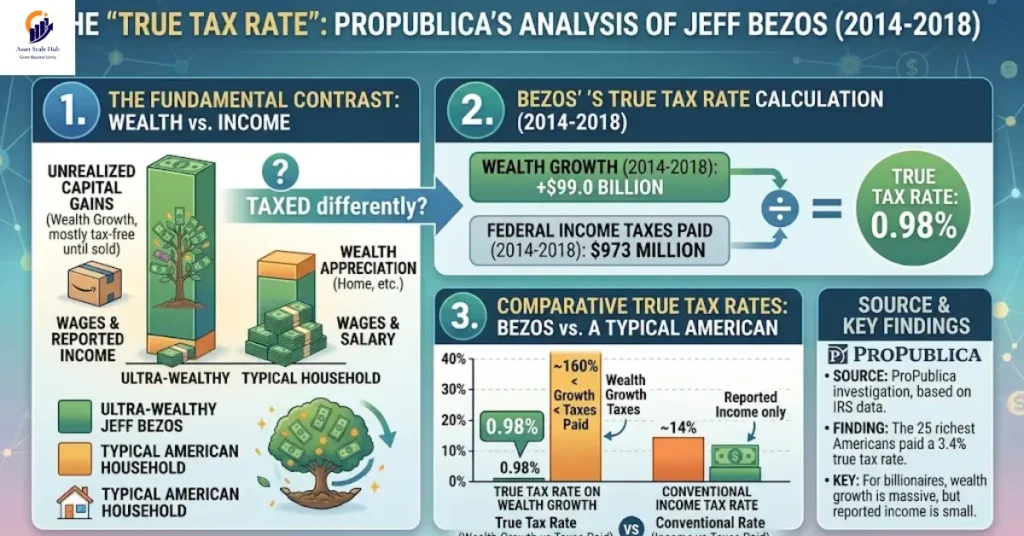
ProPublica’s 2021 series used a measure it called a “true tax rate”: taxes paid divided by the growth in a person’s wealth, using Forbes estimates. It is not a normal tax rate, and ProPublica says so.
- Jeff Bezos: his wealth grew by $99.0 billion between 2014 and 2018 (Rs 27.5 trillion), and he paid $973 million in federal taxes (Rs 270.0 billion), a true tax rate of 0.98%.
- No federal income tax: ProPublica reported that Bezos paid none in 2007 and 2011, and Elon Musk paid none in 2018.
- The top 25: the 25 richest Americans had a combined true tax rate of 3.4% over those five years, according to the Americans for Tax Fairness summary.
These figures are one newsroom’s calculation from private records, not a court finding. Defenders of the system say unrealized gains are not income under current law, and that the loans have to be repaid with interest.
It sounds like a perfect trick. It is not, for three reasons.
1. Loans can be called. A joint FINRA and SEC investor alert warns that a lender may call a securities-backed line of credit at any time and may sell the securities if the borrower cannot repay. Musk himself faced margin calls after a stock drop in 2015, according to a Forbes analysis.
2. Companies set limits. According to the same Forbes analysis, Tesla capped loans against pledged shares at 25% of their value and, in 2023, added a $3.5 billion cap on Musk’s borrowing.
3. Interest rates matter. An advisor quoted by InvestmentNews said the strategy made more sense when rates were low in the early 2000s, and is less appealing at higher rates.
Is the Buy Borro w Die Strategy Legal?
Yes, under current law. Senator Wyden himself says so, which is why he has tried to change the law rather than prosecute anyone.
The proposals to end it
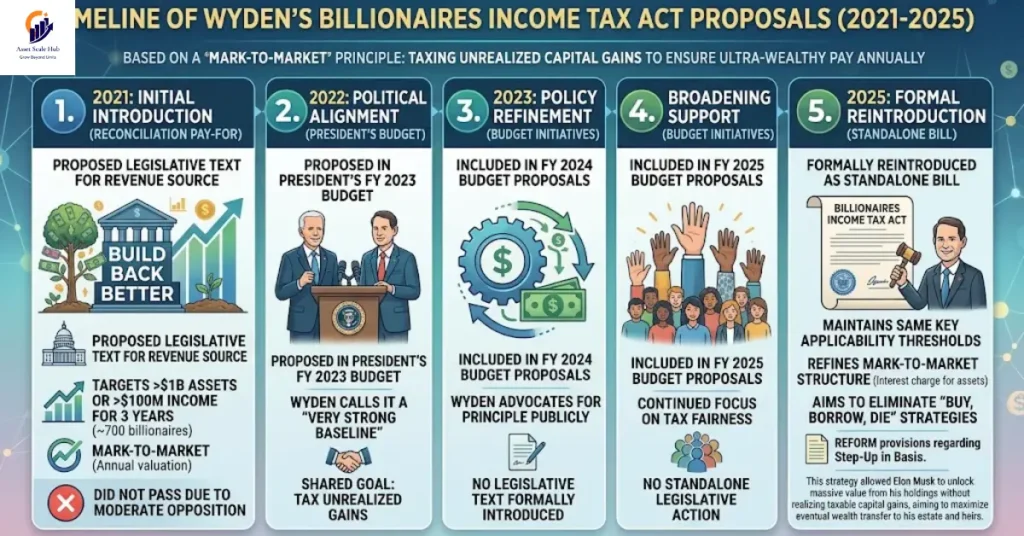
- Billionaires Income Tax Act. Wyden introduced it in October 2021, reintroduced it in November 2023 with 15 other senators, and again in September 2025 as S.2845. It would treat many holdings as if sold each year for people with more than $1 billion in assets or more than $100 million in income for three years in a row. The 2023 summary said that would affect about 700 taxpayers.
- The Biden minimum tax. President Biden proposed a 25% minimum tax on households worth more than $100 million, including unrealized gains, in his budgets.
- The cost estimates. The Penn Wharton Budget Model projected that Wyden’s bill would raise about $507 billion over 10 years, according to Wealth Management.
Why none has passed
DDTC News notes that proposals to tax unrealized gains have repeatedly failed, and that valuing private assets without a market price is one of the hard problems. In the sources I read, none of these bills has become law.
Can Ordinary People Use the Buy Borrow Die Strategy?
Technically, parts of it are available to many investors. Big banks offer securities-based loans, and one financial advisor told InvestmentNews the loophole is not only used by billionaires. But the regulators’ warning applies even more to small investors: a falling market can force a lender to sell your shares at the worst time. Speak to a qualified adviser before borrowing against investments.
Frequently Asked Questions
What is the buy borrow die strategy?
Buy assets that rise in value, borrow against them instead of selling, and hold them until death, when heirs generally receive a new tax basis equal to the value at that date.
Is the buy borrow die strategy legal?
Yes, under current US law. Senator Wyden has said the practices are perfectly legal and has proposed laws to end them.
Do you pay tax when you borrow against stock?
A loan is not a sale, so it does not trigger a capital gain the way selling does. Interest and other rules still apply, so ask a tax professional.
Does the step-up in basis remove all taxes?
No. It resets the gain for income-tax purposes, but the federal estate tax still applies above $15 million per person in 2026, at up to 40%.
Who uses the buy borrow die strategy?
Examples from the news include Elon Musk’s Tesla share loans and Larry Ellison’s pledged Oracle shares. ProPublica’s records also covered Jeff Bezos and others.
Has Congress tried to end it?
Yes. Senator Wyden has introduced the Billionaires Income Tax Act several times, and President Biden proposed a 25% minimum tax. As far as the sources I read show, none has become law.
Final Thoughts
The buy borrow die strategy is not a secret and not a crime. It is a set of ordinary-looking steps that, together, let a very wealthy person delay and sometimes avoid income tax. The numbers show how big the gap can be: a true tax rate of 0.98% for Bezos over five years. The numbers also show the costs: margin calls, interest and lenders who can call a loan.
Whether the law should change is a political question, and you can reasonably land on either side. What is not in doubt is how it works. For more on the people behind the examples, read our Larry Ellison net worth 2026 breakdown, and browse the Tech Founders & CEOs section.
Disclaimer: This article is for general information and is not financial, legal or tax advice. Tax rules differ by country and change over time. Figures come from the IRS, the Congressional Record, ProPublica, Forbes, Bloomberg, FINRA and news reports published between 2021 and 2026.